Showing posts with label Branding. Show all posts

Wednesday, August 10, 2016

sam malhotra

Know How Nike Brilliantly Ruined Olympic Marketing!

Today's strict brand guidelines date back to one moment in '96 By Robert Klara


Unless you happen to be a company like GE, Coca-Cola or McDonald's—a brand that can afford the reported $100 million to $200 million it costs to be an official Olympic sponsor—you'd better not mention the Rio games in your marketing.


As social-savvy marketers have quickly learned, the U.S. Olympic Committee has ironclad regulations, backed by U.S. trademark law, that restrain nonsponsoring brands from saying anything even vaguely evocative of the Olympics. A casual mention of Rio on Facebook? A congratulatory tweet to a gold medalist? Even tweeting the term "gold medal"? Don't do it.

"There's a good chance they'll come after you, especially if you're using what they consider their intellectual property," said Jim Andrews, svp at sports and entertainment marketing agency ESP Properties. "Most brands don't do it because it's not worth the risk." The IOC reportedly has a pack of lawyers waiting to pounce on any brand that runs afoul of its rules.

But have you ever wondered how those rules got so ridiculously tight?

The IOC has zealously guarded its trademarks for decades, of course, but if there was one tipping point, it happened 20 years ago, during the 1996 Summer Olympics in Atlanta. And on July 29, 1996, two pieces of history were made—the athletic kind and the marketing kind.

A Golden Opportunity

That afternoon, sprinter Michael Johnson took the gold in the 400-meter dash after finishing in 43.49 seconds. Tall, muscular and graceful, Johnson blew past his competitors as though they were standing still. Adding to the mesmerizing effect were the gold-colored shoes that Johnson wore on the world's fastest feet—a $30,000 pair of lightweight racing spikes given to Johnson by Nike.

Not only did millions of TV viewers see those Nike shoes on their screens, millions of Americans saw those same shoes slung around Johnson's neck a few days later on the cover of Time. It was hard to imagine a more successful piece of marketing for any Olympic sponsor.

Except for one little problem: Nike wasn't an Olympic sponsor.

Instead of paying for an official sponsorship, Nike decided it could get its brand into the 1996 games in other ways—and Johnson's gold shoes were just the beginning.

The brand opened an outsized "Nike Centre" right beside the athletes' village. Nike also distributed flags to fans, guaranteeing that its swoosh logo would be in full view all over the property.

Such tactics infuriated Reebok, which had ponied up a reported $50 million to become an official sponsor, and had a similar effect on Olympic officials.

What's more, according to veteran sports marketer and Columbia University professor Joe Favorito, Nike's marketing shenanigans were largely responsible for Olympic officials taking a hard line on nonsponsoring brands getting anywhere near the Olympics in their marketing. (The United States Olympic Committee did not respond to Adweek's request for comment for this story.)

What Nike did in Atlanta 20 years ago, Favorito said, "directly resulted in the much more stringent guidelines that both the IOC and the USOC have out there today. Anyone who goes over the line will be pushed back."

If the IOC is showing its teeth to transgressor brands today, it cut those teeth in 1996. But even though Nike did manage to get lots of cheap media exposure from its ambush marketing, the brand didn't exactly come out of Atlanta a winner.

Bold Moves and Backlash

Nike's marketing had a distinctly abrasive edge to it. For example, the brand's magazine ads blared: "If you're not here to win, you're a tourist." Nike also bought billboards space all over Atlanta to announce: "You don't win silver, you lose gold."

To some members of the public, such talk ran contrary to the spirit of good sportsmanship.
"Nike took a lot of flack for that campaign," Andrews said. "It wasn't in the spirit of the games. There's a lot of consumer love for the Olympics and the athletes, and that [marketing] just crossed the line for a lot of people."

Those people included many of the athletes and, of course, the USOC itself. Michael Paynewas the marketing coordinator for the Olympics that year. As Payne recounts in his 2012 book Olympic Turnaround: "Athletes, who had devoted their life [sic] to training and just getting to the Olympics, were angry at being positioned as 'failures.' ... We weren't going to sit back and let Nike's ambush marketing undermine and trash the very spirit and essence of the Olympic ideal."

By Payne's account, the USOC was prepared to round up a bunch of silver medalists to speak out against Nike publicly, and drew the brand into a closed-door meeting that nearly came to physical blows. Nike softened its tactics, Payne suggests, after realizing that its "campaign was backfiring" and by the time the 2000 Summer Olympics in Sydney came around, the brand "showed it was an Olympic convert" by becoming an official sponsor.
Read Full Content Here At : Adweek.com
Read More

Saturday, October 10, 2015

Sourav Malhotra

How Pepsi Landed the Perfect Product Placement, Then Made It a Reality

Meet the integration guru who invented the future

There was a time in the past when the future was not yet real. It was before Marty McFly and Doc raced through decades in a beat-up DeLorean, before hoverboards, before self-lacing shoes.
It also was a time before Pepsi Perfect.
On Oct. 21, 2015—the very day Michael J. Fox's character in Back to the Future II arrived from the 1980s into what is nearly now the present—Pepsi will, for the first time, sell bottles of Pepsi Perfect. The fictional soft drink, rich in vitamins in the movie (and now rich in pop culture), became a non-Coca-Cola classic, at a time when the red-and-white rival ruled Hollywood.
But the tale of how Pepsi Perfect arrived in "Back to the Future II" is a story in its own right.
When the 1980s began, Pepsi hadn't yet entered the realm of product integration for movies. Coca-Cola, on the other hand, had been working its way into movies since the 1916 silent film The Mystery of The Leaping Fish. By the '80s, Coke had built a full wing of its business around product tie-ins.
"Coke had had a product placement program for 20 years," said Bradford Brown, co-founder of Davie Brown Entertainment, the company that has handled placements for Pepsi since the beginning. "And for every movie there's a bottle in, it's always Coke. It's only Coke."
Placing Pepsi

In 1982, Coca-Cola acquired Columbia Pictures, just a few weeks before launching Diet Coke, making the probability of more Coca Cola even more ubiquitous in Hollywood. Brown, who had become friends with Pepsi's then-president Roger Enrico, told Enrico that Pepsi should consider launching its own initiative to enter the big screen.
Read More

Saturday, April 18, 2015

Sourav Malhotra

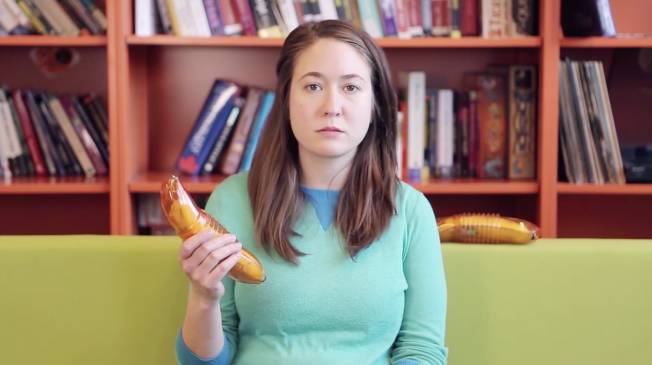
Groupon Employees Read Their Favorite Sexual Comments About the Nonsexual Banana Bunker

Groupon Employees Read Their Favorite Sexual Comments About the Nonsexual Banana Bunker  

Follow-up to famous Facebook thread

For Groupon, it's the Bunker that keeps on bunking (but not bonking).

The Banana Bunker, that famously suggestive-looking banana holder, is back "by popular demand" on the Groupon site this week. And given the success of its hilarious Facebook thread about the product last time (click here for a recap, if you were living in a real bunker at the time), the company had to do something special to celebrate.
Read More

Monday, April 13, 2015

Sourav Malhotra

When It Comes to Naming Your Startup, Simple Is Better

Doostang? Thoof? Tech companies move from bizarre to brand-friendly


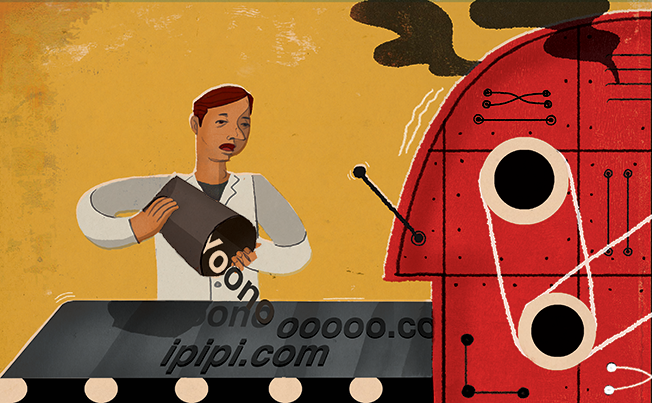
Ever hear of Doostang? Probably not. The careers site, born during the Web 2.0 era, ended up as a poster child for oddly named digital companies. Its Wiki page reveals that the name was loosely based on the Latin phrase "dos tango," translated as "I reach for talent." Even with its weird name, it managed to attract $5.8 million in funding up until 2011 when Talent Inc. acquired it. But by late last year, its social media presence disappeared, and more recently our attempts to find someone to talk to there failed.

Ironically, the company's bizarre name may have turned out to be its most lasting influence. It is regularly mentioned in lists of the worst names ever for tech startups—not quite the influence it was seeking. But Doostang is hardly alone in committing the sin of dubious digital nomenclature. Take now-defunct examples like Qoop, Fairtilizer, Ipipi.com, Heekya and Thoof.
Read More

Thursday, March 12, 2015

sam malhotra

Solving the CMO's Dilemma by Targeting Real People

Linking online and offline


Ten years ago, the Chief Marketing Officer was a perfunctory role, often relegated to coming up with a big creative idea for the Super Bowl. Today, CMOs are tasked with driving the top-line revenue growth for their organization. Their biggest challenge is measuring the efficacy of their marketing.

But in an era where there are 7.7 connected devices in an American household, keeping track of the customer's path(s) to purchase is, well, pretty difficult.

The advertising adage that "media budgets follow consumer usage" isn't quite true anymore. For example, consumer behavior has moved to mobile devices. According to Flurry, a Yahoo-owned mobile analytics company, the average American spends 2 hours 57 minutes staring at their mobile screens each day, compared to the 2 hours 48 minutes spent watching TV.
Read More

Wednesday, February 11, 2015

Sourav Malhotra

Why Today's Ads Need Amazing Soundtracks

Less stigma for bands, more resonance for brands [Video]


The way musicians and advertisers work together has undergone a revolution in the last decade. For starters, brands no longer get by with a friendly jingle—instead, they search for songs that tell stories, conjure memories and forge genuine connections with people.
Read More

Monday, February 2, 2015

Sourav Malhotra

A Boy and a Teacher Are Featured in Microsoft's Super Bowl Ads

Tech giant gets its pre-release in just under the wire

In perhaps the latest pre-release of Super Bowl ads, Microsoft this afternoon unveiled two spots just hours before kickoff.

The tech giant used in-house marketing personnel as well as outsiders to create the two real-life vignettes, "All Aboard the Brilliant Bus" and "Braylon O'Neill." (Microsoft declined to further identify who contributed to the spots but they do not involve new IPG agencies like McCann Erickson.) The work continues the empowerment message featured in last year's Super Bowl ad, which was also largely created in-house.
Read More

Wednesday, January 28, 2015

Sourav Malhotra

GoDaddy Pulls Super Bowl Ad After Complaints About 'Puppy Mill' Humor

CEO says spot 'missed the mark' but the brand has a backup plan

n the same day it released its 2015 Super Bowl ad online, GoDaddy quickly responded to a wave of criticism from dog advocates and said it would not air the spot on the game.

The 30-second ad featured a golden retriever puppy finding its way home after falling out of a truck, only to find its owner has used GoDaddy to set up a website that lets her promptly sell the dog to a new owner. The ad seemed to be an attempt at satirizing Budweiser's highly anticipated "Lost Dog," a follow-up to 2014 Super Bowl favorite "Puppy Love."
Read More

Friday, December 5, 2014

Sourav Malhotra

24 Hours in Advertising: Friday, Dec. 5, 2014

McVitie's celebrates Christmas with baby animals, the FTC cracks down on agency tweets and Amazon branded diapers?


Here's everything you need to know about the last 24 hours in advertising, in case you blinked.
Read More

Monday, December 1, 2014

Sourav Malhotra

24 Hours in Advertising: Monday, Dec. 1, 2014

Star Wars releases a new trailer, mobile Black Friday sales skyrocket and CarMax names an agency


Read More

Thursday, November 6, 2014

Sourav Malhotra

When This Lingerie Brand Stopped Photoshopping Models, Sales Shot Up 9%

Aerie's pledge is paying off


Aerie's bold decision to ditch Photoshop and other retouching tools in its lingerie ads may be paying off in more than just good karma and public approval.
Read More

Wednesday, October 29, 2014

Sourav Malhotra

Life After the Infamous 'Saatchi 17' Walkout

The Burns Group founder reinvents himself with help from 500,000 consumers


Read More

Tuesday, October 28, 2014

Sourav Malhotra

Source Marketing's Kersten Rivas on the Advantage of a Smaller Agency


Read More

Monday, September 29, 2014

sam malhotra

10 Apps to Save You Time, Money and Energy on Your Next Business Trip

With TripAdvisor reporting that 128 million people downloaded its various mobile apps in the second quarter at a rate of 28 downloads a minute, travelers seem to be relying more on mobile devices to plan, book, guide and organize their voyages.
Business travelers can benefit from using apps that deliver discounts, reviews and travel advice quickly. Business trips are already stressful. Don't add to the stress by being unorganized. Check out these 10 apps to save time, money and energy on your next business trip:
Read More

Wednesday, September 24, 2014

Sourav Malhotra

Brand Publishers Are Ditching Facebook in Favor of Microsites

Brand Publishers Are Ditching Facebook in Favor of Microsites, They want to own their data, content

Brand publishers are more aware that they’re really just renting social media space on Facebook and are moving resources away from the social network.
One agency said its clients are pulling away from Facebook in “dramatic numbers”—reallocating their resources to microsites and alternate social channels like LinkedIn—after the agency’s social media managers saw a “dramatic dip” in reach for their messaging over the last 16 months.
Read More